
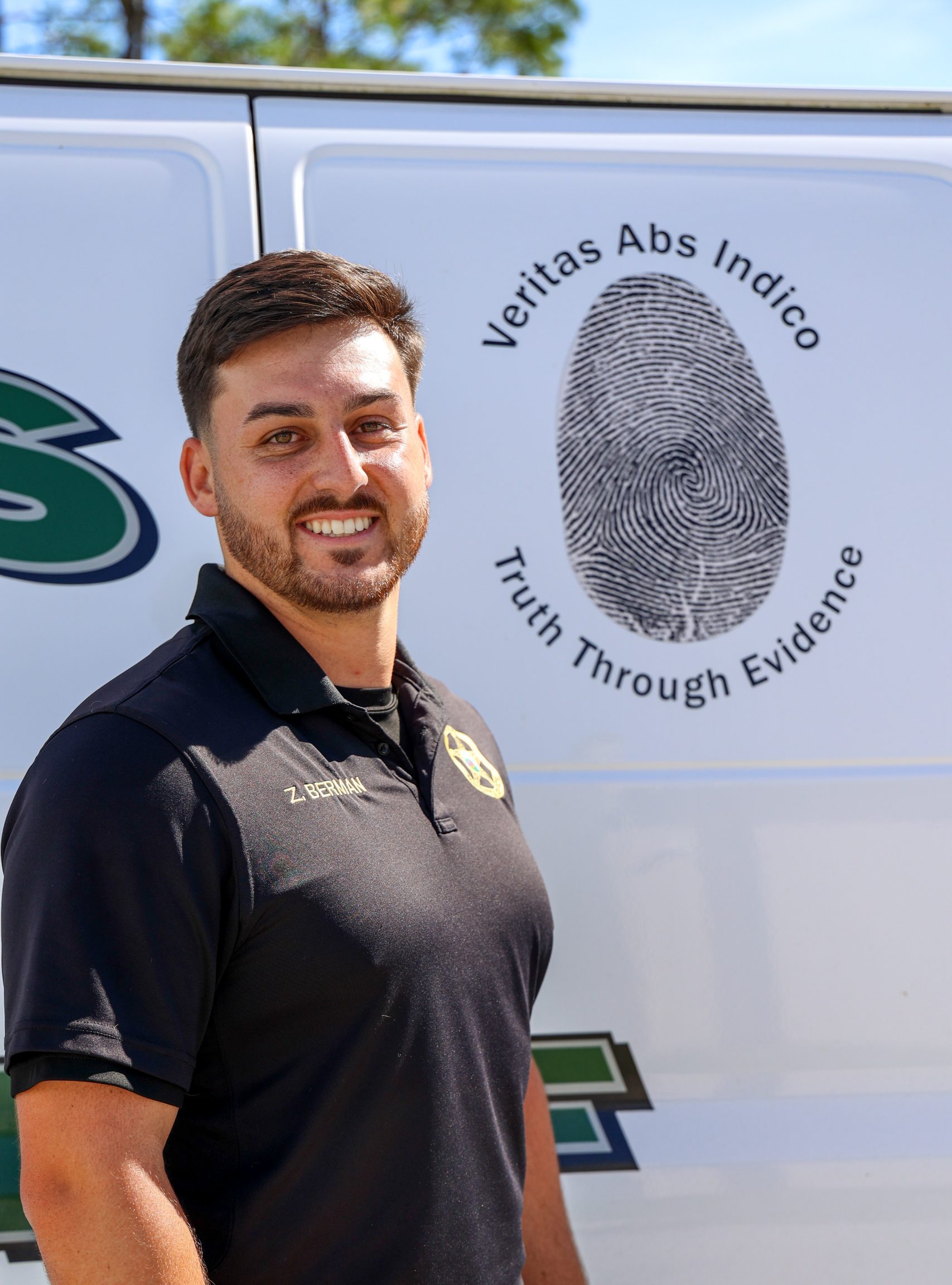
Pasco Forensic Investigator Shares Crime Scene Science Insights
Pasco County Forensic Investigator Zachary Berman discussed the realities of crime scene science, the emotional toll of the job and debunked common misconceptions during National Forensic Science Week.
Advertisement
Pasco County residents rely on forensic investigators to help solve crimes. Forensic Investigator Zachary Berman recently shared insights into his profession during National Forensic Science Week. Berman navigates scenes across Pasco County, from Wesley Chapel to rural Zephyrhills.
Forensic investigators respond to a variety of incidents, including burglaries, assaults, death investigations and arsons. "We never really know what’s going to come in on a day-to-day basis. But we’re prepared to handle whatever comes our way," Berman said. "We see it all." Their priority upon arrival is to document the environment and process evidence without bias.
Evidence processing varies. Some items require simple collection, while others, like DNA or fingerprint analysis, demand more extensive work. A single scene can yield from a few pieces of evidence to over a hundred. The Forensic Service Division works closely with a latent print unit within the same office.
Investigators collaborate with detectives from major crimes and property crimes units, as well as the Property and Evidence Unit. "We all work towards a common goal of working hard for the people of Pasco County," Berman said. He acknowledged the mental stress of the job, citing the emotional toll of witnessing difficult scenes in diverse locations like Trinity and Dade City. "The mental toll of some of the calls we respond to can be heavy, and oftentimes these feelings are internalized." Berman stressed the importance of accuracy and securing evidence, which significantly influences a case.
Berman also addressed common misconceptions about forensic investigations, particularly the "CSI effect." He clarified that real investigations differ from television portrayals. "It may take me just an hour to go to a call. Some of our cases could take days, weeks, months, and years to complete," he explained. "And, the perfect evidence, it’s not always present." Investigations often require teamwork and considerable time to yield results.
For those considering a career in forensics, Berman recommended at least an Associate degree. A Bachelor's degree in Science, Criminal Justice, or a related field is beneficial. Previous experience through internships or volunteer work is also important for entering the field.




Discussion (0)
Join the Conversation
Join the conversation
Sign in to share your thoughts, reply to readers, and like comments.
No comments yet. Be the first to comment!