
Notices
Public legal notices and court announcements

Utah Constitution
Utah Constitution Index Home Utah Constitution Constitution Constitution Download Options PDF | RTF | XML Constitution PreamblePreamble Article IDeclaration of Rights Article IIState Boundaries Article IIIOrdinance Article IVElections and Right of Suffrage Article VDistribution of Powers Article VILegislative Department Article VIIExecutive Department Article VIIIJudicial Department Article IXCongressional and Legislative Apportionment Article XEducation Article XILocal Governments Article XIICorporations Article XIIIRevenue and Taxation Article XIVPublic Debt Article XVMilitia Article XVILabor Article XVIIWater Rights Article XVIIIForestry Article XXPublic Lands Article XXIIMiscellaneous Article XXIIIAmendment and Revision Article XXIVSchedule

Utah Code
Utah Code Index Home Utah Code Historical Code Utah Code Utah Code Title 3Uniform Agricultural Cooperative Association Act Title 4Utah Agricultural Code Title 6Assignment for Benefit of Creditors Title 7Financial Institutions Act Title 8Cemeteries Title 9Cultural and Community Engagement Title 10Utah Municipal Code Title 11Cities, Counties, and Local Taxing Units Title 12Collection Agencies Title 13Commerce and Trade Title 14Contractors' Bonds Title 15Contracts and Obligations in General Title 15AState Construction and Fire Codes Act Title 16Corporations (Superseded 10/1/2026) Title 16Business Entities (Effective 10/1/2026) Title 17Counties Title 17BLimited Purpose Local Government Entities - Special Districts Title 17CLimited Purpose Local Government Entities - Community Reinvestment Agency Act Title 17DLimited Purpose Local Government Entities - Other Entities Title 17ECounties and State Government Title 18Dogs Title 19Environmental Quality Code Title 20AElection Code Title 23AWildlife Resources Act Title 25Fraud Title 26ALocal Health Authorities Title 26BUtah Health and Human Services Code Title 29Hotels and Hotel Keepers Title 31AInsurance Code Title 32BAlcoholic Beverage Control Act Title 34Labor in General Title 34AUtah Labor Code Title 35AUtah Workforce Services Code Title 36Legislature Title 38Liens Title 39ANational Guard and Militia Act Title 40Mines and Mining Title 41Motor Vehicles Title 42Names Title 43Negotiable Certificates Title 45Publication and Broadcasting Title 46Notarization and Authentication of Documents, Electronic Signatures, and Legal Material Title 48Unincorporated Business Entity Act Title 49Utah State Retirement and Insurance Benefit Act Title 50Pools and Trusts Title 51Public Funds and Accounts Title 52Public Officers Title 53Public Safety Code Title 53CSchool and Institutional Trust Lands Management Act Title 53DSchool and Institutional Trust Fund Management and Land Trusts Protection and Advocacy Office Title 53EPublic Education System -- State Administration Title 53FPublic Education System -- Funding Title 53GPublic Education System -- Local Administration Title 53HHigher Education Title 54Public Utilities Title 55Public Welfare Title 56Railroads Title 57Real Estate Title 58Occupations and Professions Title 59Revenue and Taxation Title 61Securities Division - Real Estate Division Title 63AUtah Government Operations Code Title 63BBonds Title 63CState Commissions and Councils Code Title 63DInformation Technology Act Title 63EIndependent Entities Code Title 63GGeneral Government Title 63HIndependent State Entities Title 63IOversight Title 63JBudgeting Title 63LLands Title 63MGovernor's Programs Title 63NEconomic Opportunity Act Title 63OCapitol Hill Title 64State Institutions Title 65AForestry, Fire, and State Lands Title 67State Officers and Employees Title 68Statutes Title 69Telegraphic and Telephonic Transactions Title 70Trademarks and Trade Names Title 70AUniform Commercial Code Title 70CUtah Consumer Credit Code Title 70DFinancial Institution Mortgage Financing Regulation Act Title 71AVeterans and Military Affairs Title 72Transportation Code Title 73Water and Irrigation Title 75Utah Uniform Probate Code Title 75AFiduciaries Title 75BTrusts Title 75ECriminal and Juvenile Justice Administration Title 76Criminal Offenses Title 77Criminal Procedure Title 78AJudiciary and Judicial Administration Title 78BJudicial Code Title 79Natural Resources Title 80Utah Juvenile Code Title 81Utah Domestic Relations Code
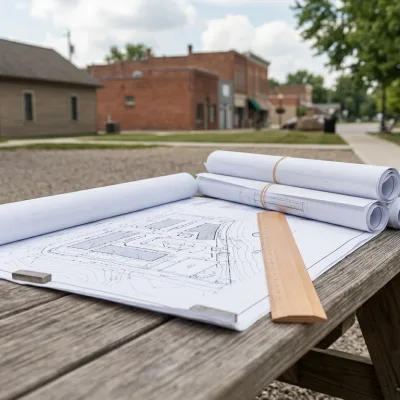
BOX ELDER COUNTY COMMISSION ADOPTS TEMPORARY 180-DAY LAND USE REGULATION FOR DATA CENTERS
Box Elder County has approved a temporary 180-day pause on new data center applications while the County studies potential land use regulations and development standards.
Box Elder County Attorney Issues Legal Decision on Referendum Applications for Resolutions
FOR IMMEDIATE RELEASE Box Elder County Attorney Issues Legal Decision on Referendum Applications for Resolutions BOX ELDER COUNTY, UTAH — Box Elder County recently received three applications for referendum from two different groups challenging the Box Elder County Commission's decision to pass Resolutions 26-11 and 26-12. The applications from the first group were received on May 8, 2026, and the applications from the second group were received on May 11, 2026. "The Box Elder County Clerk's Office is committed to overseeing the referendum process with strict adherence to state law," stated Marla Young, the County Clerk. "Whenever an application is filed, we immediately initiate the required statutory review, which involves submitting the application to the County Budget Officer for a fiscal impact statement and to the County Attorney for a mandatory legal analysis to determine if the measure can legally be placed on the ballot." Following a mandatory legal review of these applications, Box Elder County Attorney Stephen R. Hadfield has officially determined that neither resolution is legally referable to voters. As a result, the referendum applications have been rejected. Hadfield stated that the determination was based on his legal obligation to apply Utah constitutional, statutory, and case law governing referendum eligibility. “I acknowledge and take very seriously my responsibility to uphold the constitutional right of Box Elder County residents to refer legislative actions of the Box Elder County Commission to the voters for their approval or rejection. This constitutional right is implemented by Utah State statute and applies only to County Commission actions which create new laws. In my opinion, both the statute and the case law interpreting it define Resolutions 26-11 and 26-12 as administrative actions of the Box Elder County Commission, not newly created laws. Accordingly, because I am obligated to interpret and uphold the law, I am legally bound to reject the applications for referenda of these resolutions. I fully anticipate and appreciate that this will allow referendum sponsors who disagree with my opinion to appeal to the state courts for further guidance and resolution.” Understanding the Local Referendum Process In Utah, citizens have the right to circulate a referendum petition to submit a passed local law to a vote of the people for their approval or rejection. When eligible voters file a referendum application with the local clerk, the county attorney has 20 calendar days to review it and determine if the proposed referendum is legally referable to voters. The attorney must then provide written notice of this determination to the sponsors. Under Utah's Election Code, a proposed referendum is not referable if it challenges a government action that is administrative, rather than legislative, in nature. Legislative acts create new laws of general applicability based on weighing broad policy considerations, whereas administrative acts simply implement laws that already exist. Statutory Fiscal and Legal Analysis By law, within three business days of receiving a referendum application, the county's budget officer, together with legal counsel, must prepare an unbiased, good-faith initial fiscal and legal impact statement. This statement must evaluate the estimated fiscal impact of repealing the law, including any increases or decreases in taxes, effects on public debt, and costs or savings to local government entities. Box Elder County Auditor Shirlene Larsen, acting as the budget officer, completed the required fiscal analysis. The resulting analysis determined that repealing the resolutions would result in the loss of guaranteed revenue, including $5.4 million annually and an estimated $108 million annually at full capacity. Furthermore, if the development moves forward without the resolutions, the county would likely face increased expenditures of approximately $5.4 million per year for services such as fire, ambulance, and police, and holding a special election for the referendums would cost the county an estimated $55,000. "My duty as the County’s budget officer is to prepare an unbiased, good-faith estimate of the fiscal and legal impacts these referendums could have on Box Elder County," stated County Auditor Shirlene Larsen. "In this role, I serve as a neutral party responsible for providing factual information required under Utah law. I am committed to fulfilling these statutory requirements, so the public has a clear and accurate understanding of the potential financial consequences, including possible impacts to projected revenue and estimated costs to local government." Resolution 26-11: Consent for MIDA Project Area Resolution 26-11 provided Box Elder County’s formal consent to include specific land in the Military Installation Development Authority (MIDA) Stratos Project Area. The County Attorney determined this action is an administrative act, not a legislative one, because it does not create a new law of general applicability. Instead, the resolution acts as a record of consent that implements provisions of the MIDA Act, which mandates counties to cooperate with MIDA. Under the state's MIDA Act, a county's consent to include land in a project area is irrevocable, meaning the resolution cannot be overturned. Resolution 26-12: Interlocal Cooperation Agreement Resolution 26-12 authorizes an interlocal cooperation agreement with MIDA, obligating the County to provide emergency services and road maintenance for private land within the project area in exchange for tax revenue. The agreement also outlines ten specific standards for the project area, such as requiring valid water rights, allowing a maximum of 150 hotel rooms, and prohibiting permanent residences. The County Attorney found that this agreement is administrative because it implements MIDA's existing project area plan and acts as a specific contract between the County and MIDA, rather than creating a new, generally applicable law. Because both resolutions represent administrative implementations of existing laws and are not broadly applicable legislative acts, state law dictates that they cannot be placed on the ballot for a voter referendum. The sponsors of the proposed referendum have been notified in writing of these rejections. Under Utah law, sponsors have the right to challenge or appeal a rejection decision to a district court or the Utah Supreme Court within a specified timeframe. Further Information For further information on local referendum processes, the public is encouraged to visit the Lieutenant Governor's website. Additional information on these referenda applications, the associated fiscal impact statements, and other associated records is available on Box Elder County’s website. **To protect the judicial process as the sponsors consider whether or not to move forward through the court system, the county elected officials and staff will not be providing additional interviews at this time. Questions related to the county’s decisions and participation in the local referendum process can be forwarded to the County’s PIO, Lynnette Crockett. Media Contact Lynnette Crockett Box Elder County Public Information Officer [email protected] 435-740-7590 cell phone