
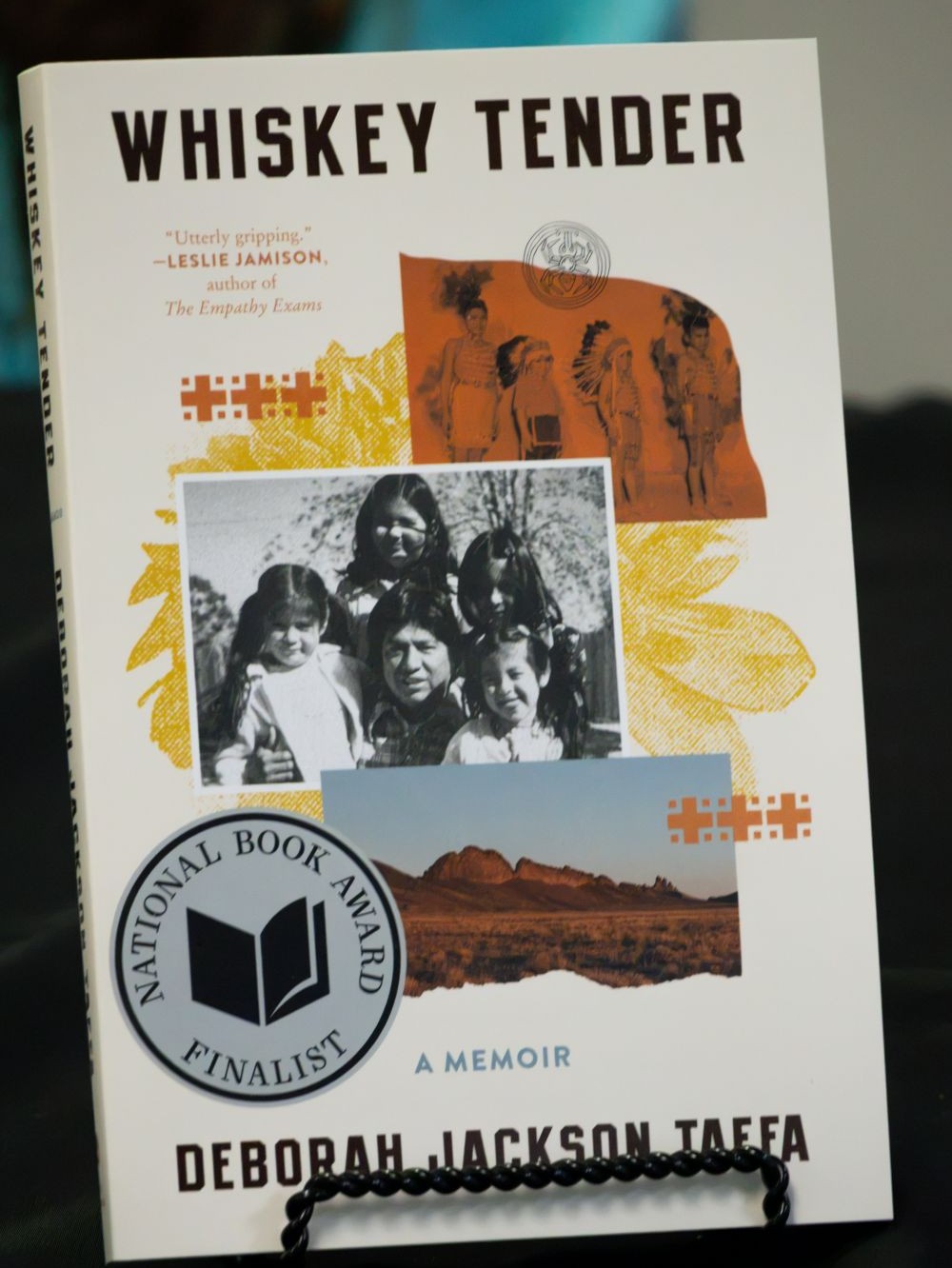
Deborah Jackson Taffa at Eckerd College: History & Identity
National Book Award Finalist Deborah Jackson Taffa visited Eckerd College to discuss her memoir 'Whiskey Tender,' exploring themes of history, identity, and memory.
Advertisement
Author Deborah Jackson Taffa visited Eckerd College on Sept. 16 to discuss her memoir, “Whiskey Tender.” The book served as the summer reading selection for first-year and senior students. The event was part of the Eckerd Class of 1968 Distinguished Speaker Series.
Taffa’s memoir explores her childhood on the Fort Yuma Reservation and among the Navajo Nation. Her visit aligned with Eckerd’s academic year theme, “What We Remember,” which examines personal and public histories and memory’s complexities. Taffa described her memoir as a migration story, detailing her family’s journey into mainstream America. She shared that her mother’s decision to speak only Spanish during Taffa’s childhood stemmed from “cultural cringe.”
Addressing a full house in Fox Hall, Taffa expressed surprise at her story’s broad reach. “It’s always a pleasant surprise to find that my story has the capacity to reach people from all generations and all walks of life,” she said. Taffa explained that what she once saw as personal confusion about her family’s history and identity is a shared experience for many. Her memoir aims to illuminate these broader narratives.
“I didn’t write this story to create a divide,” Taffa stated. “I told it in this book, because there are too many dark corners in America that can be relieved of persistent shadows by shining just a little bit of light and making people feel seen.”
Taffa recounted her parents’ belief in the U.S. as a meritocracy and the pressure she felt regarding her education. Her ancestors’ successes were often overlooked in favor of focusing on their struggles. Her family taught her that “strong Indigenous people refused to think of themselves as victims.” Taffa connected this to the educational process for Eckerd students, noting that education can involve confronting difficult truths.
“To receive an education is to receive wounding,” she said, advising students to prepare for this and acknowledge the limits of their current knowledge.




Discussion (0)
Join the Conversation
Join the conversation
Sign in to share your thoughts, reply to readers, and like comments.
No comments yet. Be the first to comment!