
Fire Extinguisher Types for Douglas County Buildings
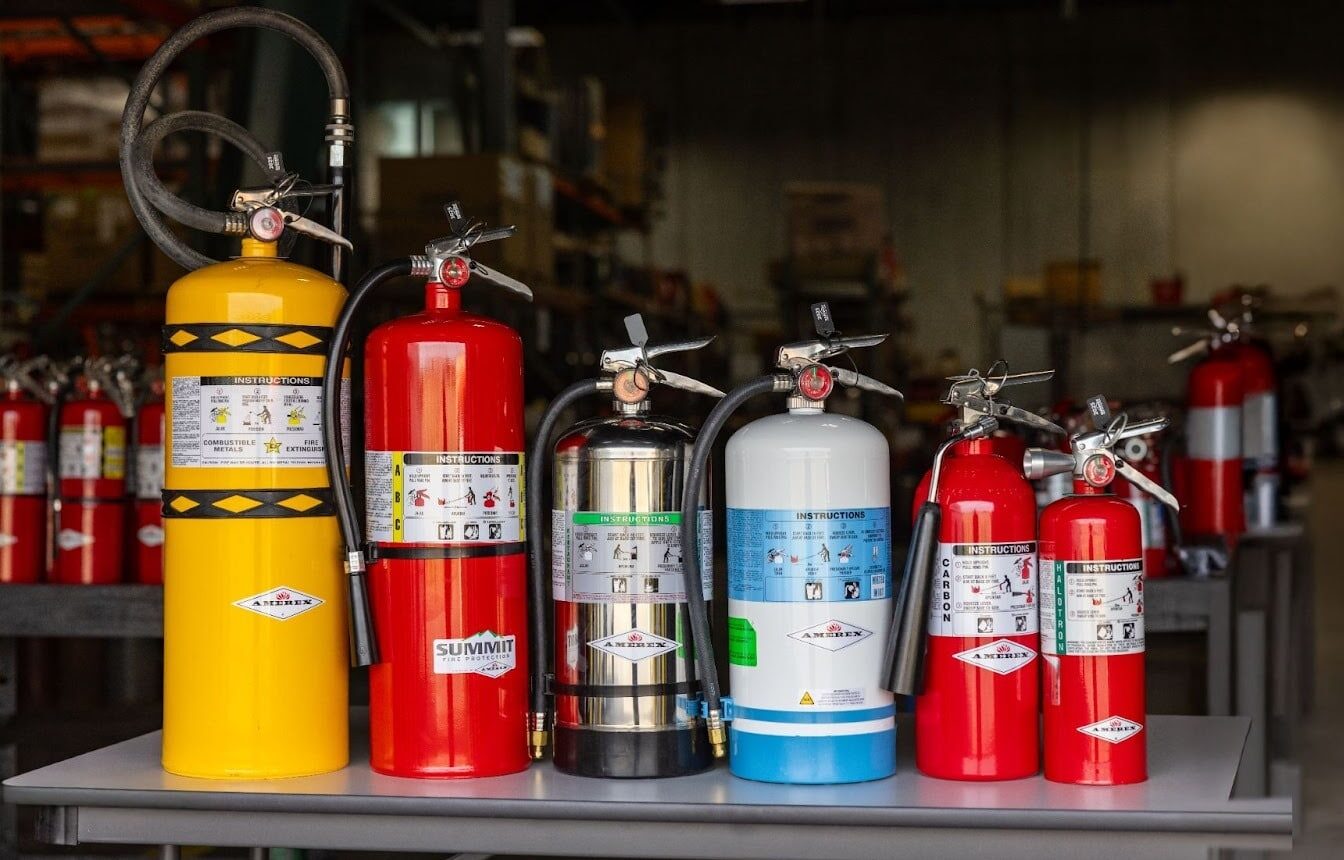
Douglas County residents and business owners must match their fire extinguishers to the specific fire risks in their buildings. Using the wrong type can make a fire worse. Water extinguishes ordinary combustibles but causes electrical shock on live wires and violent explosions with cooking oil.
The National Fire Protection Association classifies fires by fuel type, and fire codes require specific extinguishers for each class. A commercial kitchen needs different protection than a server room or warehouse.
The five fire classes are:
Class A: Ordinary combustibles like wood, paper, and cloth.
Class B: Flammable liquids and gases like gasoline and propane.
Class C: Energized electrical equipment. Becomes Class A or B once power is cut.
Class D: Combustible metals like magnesium and titanium. Rare outside industrial settings.
Class K: Cooking oils and fats at high temperatures.
Multipurpose dry chemical (ABC) extinguishers work on Classes A, B, and C fires and suit most offices and common areas. Carbon dioxide extinguishers work on Class B and C fires and leave no residue, making them ideal for server rooms and labs. Commercial kitchens require wet chemical extinguishers designed for Class K fires, which cool burning oil and form a foam layer to prevent re-ignition.
Building managers and occupants should know which extinguishers are present in their spaces and why they were chosen for those locations.
Related Topics
Article Ratings
0 ratings submitted
Discussion (0)
Join the Conversation
No comments yet. Be the first to comment!