
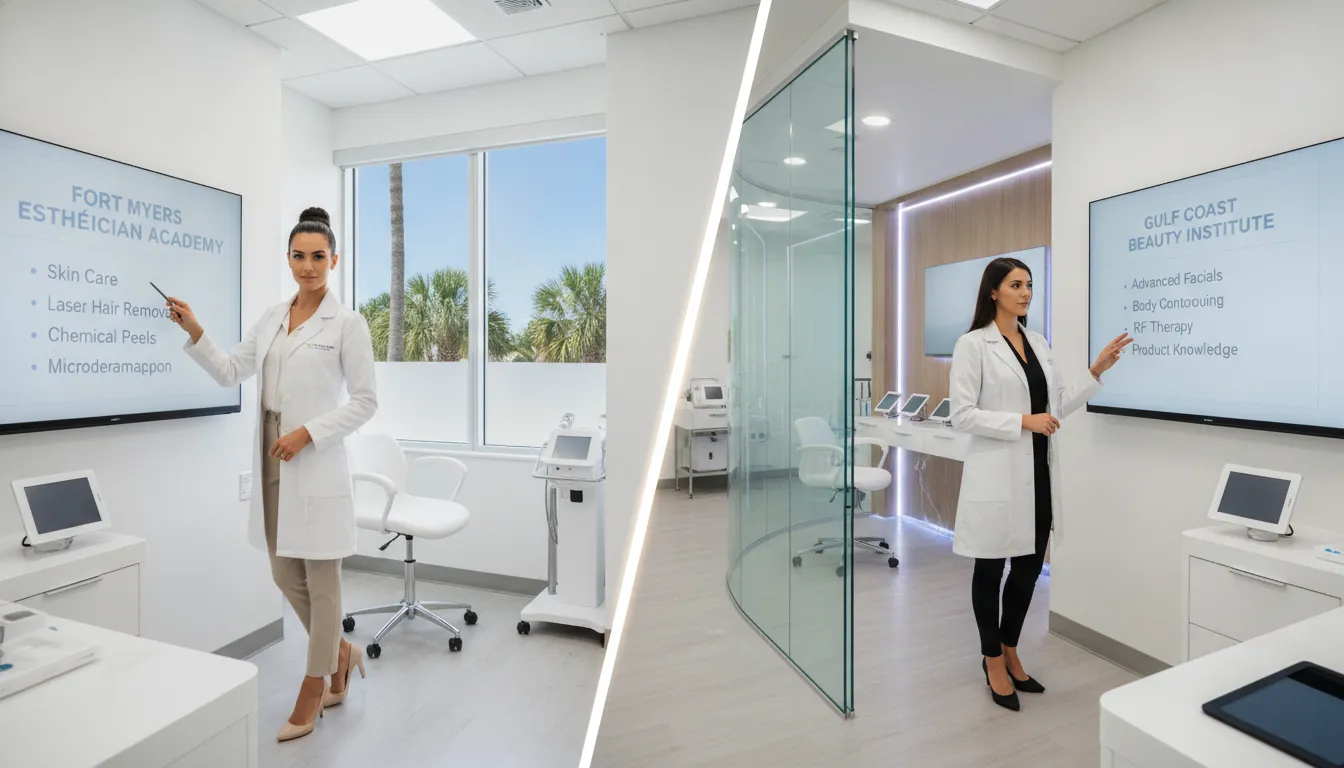
If you’re considering a career change, esthetics training can offer a practical way to develop job-ready skills in a focused program. Esthetician training in Fort Myers can prepare you for entry-level opportunities in salons, spas, resorts, wellness centers, skin care retail, and other professional settings. Your first decision is choosing the type of training that fits the services you want to provide. You may prefer facial services, broader skin care, professional esthetics, eyelash extensions, or permanent makeup. Florida Academy offers beauty and wellness programs that combine classroom learning with hands-on practice. It also provides career services, financial-aid guidance, and placement assistance to support students beyond the classroom. Key Takeaways Start with your intended career path: Choose a program based on the services you want to offer, the Florida registration it supports, and the workplaces you hope to join. Compare the complete investment: Review tuition, supplies, fees, transportation, schedule, clinic hours, financial-aid options, and any income lost while attending school. Look for practical and professional preparation: Prioritize supervised client practice, current equipment, licensing guidance, résumé support, interview preparation, employer connections, and placement assistance. Which Esthetician Training Programs Are Available in Fort Myers? Students comparing esthetician training in Fort Myers can choose from several education paths, including facial specialist programs, full specialist training, skin care programs, professional esthetics courses, and focused certificates. The best option depends on the services you want to provide, the credential you need, and the type of workplace you hope to join after graduation. Florida Academy offers licensed and accredited career training in beauty, wellness, health, and skilled trades. Its skin care program combines classroom learning with practical instruction, giving students opportunities to develop technical skills and client-care habits in a supervised setting. Review the Florida Academy skin care program for information about available training and certificate options. When comparing schools, look beyond the program name. Ask how much hands-on practice is included, which equipment students use, and whether clinic services are part of the curriculum. It is also worth comparing class sizes, instructor support, scheduling options, career services, and the school’s approach to preparing graduates for work. Compare Florida Academy’s licensed, accredited skin care and esthetics programs Florida Academy’s skin care training is designed for students interested in professional beauty and wellness services. Coursework can help students build knowledge of skin care techniques, client consultations, product use, sanitation, and workplace professionalism while practicing in a supervised environment. The program also includes focused certificate options. According to the Skin Care program information, students may train as Permanent Makeup Artists or Eyelash Extensions Technicians. These options may appeal to students who want to develop a specific service area rather than complete a broader program. Before enrolling, confirm the program’s admissions requirements, curriculum, schedule, total cost, and completion expectations. Ask how the training relates to Florida’s facial specialist registration process and whether the school explains the professional responsibilities associated with the services taught. Choose among facial specialist, full specialist, skin care, and professional esthetics paths A facial specialist path may suit students who want to focus on facials, skin consultations, cleansing services, and related skin care treatments. Full specialist training typically covers a wider range of services, which may provide more flexibility when applying for positions in salons, spas, and wellness businesses. Skin care and professional esthetics programs may include treatment planning, product knowledge, sanitation, client communication, and service recommendations. Florida Academy offers several career training programs in beauty and wellness, making it easier to compare training paths based on your interests. Start by listing the services you want to provide after graduation. Then ask each school which program covers those services, what credential or registration it supports, and whether you will need additional education for specialized treatments. Explore advanced aesthetics, laser services, and specialty certificates Some students begin with foundational skin care training and pursue specialty education later. Advanced aesthetics courses may address equipment-based treatments, advanced facial techniques, or laser-related topics. The exact curriculum varies by school, so ask for a detailed course outline before making a decision. Florida Academy’s skin care program includes access to MedSpa equipment such as the Epiwave Ultrasonic Facial and Endermologie Machines. Learning with professional equipment can give students experience with tools they may encounter in a salon, spa, or wellness setting. Students interested in permanent makeup or eyelash extensions can also compare focused certificate options. If you are considering laser services, microneedling, or medical aesthetics, ask whether the program offers classroom instruction, supervised practice, or both. You should also verify whether Florida law requires additional credentials, medical oversight, or other authorization for the service. Practice in a student salon through hybrid theory and hands-on training Esthetics training should include more than reading about skin care techniques. Repeated practice helps students become more comfortable with consultations, treatment preparation, sanitation, product application, and client communication. Florida Academy provides hands-on training in a student salon environment, where students can apply classroom lessons under supervision. This experience can help you practice greeting clients, explaining services, maintaining a clean workspace, and responding to questions in a professional manner. Ask admissions how the hybrid format works before you enroll. Find out which lessons take place online, how often you must attend campus, and which services must be completed in person. You should also ask how instructors assess practical skills and whether students receive feedback throughout the program. Compare equipment, clinic hours, class sizes, and instructor support Training facilities can vary, even when schools use similar program titles. During a campus visit, ask to see the student salon, treatment rooms, sanitation areas, and equipment. Find out whether students use professional tools during regular practice or mainly watch demonstrations. Ask how many clinic or practical hours the program includes and how students make up missed sessions. Consistent hands-on practice can help you build confidence and prepare for the pace of a professional workplace. You may also want to ask whether students work with members of the public under instructor supervision. Class size affects how much individual feedback you receive. Smaller groups may make it easier to ask questions, correct technique, and get help during services. Ask about instructor availability, practical evaluations, attendance expectations, and interview preparation. Florida Academy’s career services can also help students prepare for employment and learn more about professional opportunities after training. What Will Esthetician Training in Fort Myers Teach You? Esthetician training in Fort Myers should prepare you for more than performing basic skin care services. You’ll learn how to assess a client’s skin, choose suitable treatments, maintain a safe workspace, and communicate professionally from the first consultation through follow-up care. Florida Academy’s skin care and esthetics program combines classroom instruction with practical experience, giving you opportunities to develop technical skills in a supervised setting. The curriculum depends on the program you choose, but most training covers skin care theory, facials, treatment planning, sanitation, product knowledge, professional equipment, client communication, and career preparation. Before enrolling, review the course details and ask how much time you’ll spend practicing services with real clients in a student salon or clinic. Perform facials, skin consultations, treatment planning, and product recommendations A core part of esthetician training is learning how to evaluate a client’s skin and recommend services based on their concerns, goals, and skin type. You may practice conducting consultations, recognizing conditions that affect treatment choices, and creating a personalized service plan. Hands-on training can include cleansing, exfoliation, extractions, masks, massage techniques, and other facial services. You’ll also learn how to explain each step, set realistic expectations, and recommend home-care products that support a client’s routine. These skills help you provide more personalized care and build trust over time. Follow sanitation, infection-control, safety, and professional standards Cleanliness and safety are essential in every skin care setting. Esthetician students learn how to prepare treatment areas, disinfect tools and surfaces, handle linens, and follow proper handwashing procedures. Training also covers infection-control practices that help protect clients and professionals. You’ll study skin anatomy, physiology, product ingredients, and common conditions that may affect whether a service is appropriate. You’ll also learn when to modify a treatment or refer a client to a medical professional. Florida’s cosmetology regulations provide important guidelines for safe practice. Instructors then help you apply those standards during clinic work, along with professional habits such as protecting client privacy and maintaining accurate service records. Use Epiwave Ultrasonic Facial and Endermologie equipment Modern skin care clinics may use specialized equipment alongside traditional facial techniques. According to Florida Academy’s skin care program information, students can gain hands-on experience with MedSpa equipment such as the Epiwave Ultrasonic Facial and Endermologie machines. This practice helps you become more comfortable using professional technology in a supervised setting. You’ll learn how equipment fits into a treatment plan, how to prepare a client, and how to follow operating and safety instructions. When comparing programs, ask which machines you’ll use, how often you’ll practice with them, and whether equipment training is included in the published tuition. Earn Permanent Makeup Artist and Eyelash Extensions Technician certificates Some esthetics programs offer specialty training that can expand the services you provide after graduation. Florida Academy’s skin care program highlights certificate options for Permanent Makeup Artists and Eyelash Extensions Technicians. These credentials may support additional beauty services, depending on your career goals and Florida’s current requirements. Specialty certificates can be useful if you want to work in a full-service salon, spa, or beauty studio. They may also help you create a focused service menu for an independent business. Before enrolling, ask whether a certificate is included in your program, offered separately, or requires additional tuition and supplies. Confirm which services fall within your legal scope of practice and whether extra training or supervision applies. Recommend products, communicate with clients, and plan services Successful estheticians need strong people skills as well as technical ability. During training, you’ll practice asking thoughtful questions, listening to client concerns, and explaining treatment options in clear, respectful language. You’ll also learn how to recommend products without making unsupported promises or pressuring clients to buy. Service planning is another important skill. A client may need a gentler treatment, a series of appointments, or a different home-care routine based on their skin’s response. Learning to document services and discuss follow-up care helps you provide consistent experiences. These communication skills are useful in salons, spas, medical offices, and retail settings, and they can help you develop lasting client relationships. Build a portfolio and prepare for interviews and employment Career preparation should be part of your esthetician education, rather than something you handle after graduation. As you complete supervised services, ask whether you can document your work for a professional portfolio. Photos, service descriptions, instructor feedback, and treatment plans can help show potential employers what you know and how you work. You may also practice writing a résumé, completing applications, answering interview questions, and presenting yourself professionally. Florida Academy offers career services that include employment guidance, employer connections, and placement assistance. Ask how the school supports students during the job search, which employers it works with, and whether help continues after graduation. What Must You Do After Esthetician Training in Florida? Completing esthetician training is an important milestone, but it is not the final step before you begin working with clients. Florida requires skin care professionals to complete the appropriate education, register with the state when required, follow sanitation standards, and stay within the services allowed by their credential. The term “esthetician license” is common in schools, job listings, and everyday conversation. However, Florida uses specific registration categories under its cosmetology laws. Before enrolling, confirm which credential your program supports and review the latest requirements from the Florida Department of Business and Professional Regulation. Distinguish facial specialist registration from the common term “esthetician license” Florida does not generally issue a credential formally titled an “esthetician license.” Instead, a skin care professional may register as a facial specialist or pursue a broader specialty registration, depending on their education and career plans. Facial specialists typically provide services such as facials, skin care treatments, makeup application, and certain hair-removal services. Schools and employers may still use terms such as esthetician, skin care specialist, or professional esthetician to describe the role. Ask each school which state registration its program is designed to support. Florida Academy’s Skin Care Program provides training for students interested in professional skin care and related services. Complete the 220-hour education requirement at an approved school Florida facial specialist registration generally requires 220 hours of education through an approved school or program. This training introduces the technical knowledge and practical skills you need to provide services safely. Your coursework may cover skin anatomy and physiology, product knowledge, sanitation, infection control, common skin conditions, treatment techniques, client consultations, and professional ethics. Hands-on practice also helps you become more comfortable with products, equipment, treatment procedures, and client communication. Before enrolling, confirm that the school is approved for the registration you want. Ask whether tuition includes supplies, textbooks, uniforms, tools, and clinic materials. Florida Academy’s program information also outlines admissions requirements, including a background check completed within the required timeframe. Submit DBPR applications, HIV/AIDS education, fees, renewals, and continuing education After completing your education, submit the appropriate application to DBPR and provide the documents it requests. Depending on the registration, this may include proof of education, identification, background-check information, and application fees. You may also need to complete an approved HIV/AIDS course. Keep copies of your education records, course certificates, application, and payment confirmation. Missing documents can delay your registration, so review the current instructions before submitting anything. Registration also comes with ongoing responsibilities. You must renew it according to the state’s schedule and complete any continuing education that applies to your credential. Check the current DBPR cosmetology forms and applications before each renewal instead of relying on an outdated checklist. Follow Florida’s facial specialist scope of practice Your registration determines which services you may legally provide. Facial specialists commonly perform services such as cleansing, exfoliation, facials, facial massage, makeup application, and certain hair-removal treatments permitted by Florida law. You must follow proper sanitation, disinfection, infection-control, and client-safety procedures during every appointment. Use products as directed, clean and disinfect tools correctly, and prevent cross-contamination between clients. You should also recognize when a concern falls outside your training. A facial specialist should not diagnose medical conditions or claim to treat disease. If a client has a concern that requires medical attention, stop the service and recommend that they consult a qualified health care provider. Review the Florida statute addressing facial specialist services for the state’s current scope-of-practice language. Obtain additional credentials for laser, microneedling, medical aesthetics, and restricted procedures Advanced services may require education beyond a facial specialist program, additional credentials, medical supervision, or compliance with separate regulations. Laser treatments, microneedling, injectables, and certain chemical peels or medical-aesthetic procedures should not be added to your service menu simply because you completed basic skin care training. Requirements may depend on the procedure, equipment, workplace, and professional responsible for performing or supervising the service. Employers may also require manufacturer training, clinical experience, professional liability insurance, or other documentation. If you plan to work in a medical spa, dermatology office, or plastic surgery practice, ask employers which qualifications they expect. You can compare further coursework with Florida Academy’s Professional Esthetics program. Treat private certificates as additional training, not automatic authorization to perform restricted procedures. Verify current requirements with Florida’s DBPR before enrolling Licensing and registration rules can change, and a program that sounds appropriate may not lead to the credential you need. Before paying a deposit, ask the school for the exact registration supported by its curriculum, the required number of hours, and the steps you will complete after graduation. Use DBPR as your final source for applications, fees, renewal periods, continuing education, and scope-of-practice questions. You can also ask admissions staff how the school supports paperwork, practical training, and preparation for your first job. A conversation with DBPR and the school can help you avoid costly confusion. Florida Academy’s career services team can also help connect your training plan with employer expectations and your next steps after graduation. How Much Does Esthetician Training in Fort Myers Cost? The cost of esthetician training in Fort Myers depends on the program’s length, curriculum, schedule, and included supplies. A 220-hour facial specialist program may cost less than a full specialist or advanced esthetics program because it requires fewer training hours and may cover a narrower range of services. Tuition is only one part of the total cost, however. You may also need to pay for a starter kit, textbooks, uniforms, professional products, registration, and licensing expenses. Transportation, childcare, parking, meals, and time away from work can also affect your budget. Before choosing a school, request a written estimate that separates tuition from fees and supplies. Ask what is included, what you must purchase separately, and whether financial aid may reduce your balance. Florida Academy provides information about financial-aid options for eligible students, including scholarships, grants, loans, and military education resources. Compare tuition for 220-hour and advanced esthetics programs A 220-hour facial specialist program may be an appropriate choice if your goal is to meet Florida’s basic education requirement and begin providing facial services. Because the program is shorter, it may have a lower tuition price than a broader esthetics course. Advanced esthetics programs typically include more classroom instruction, practical training, equipment experience, and specialty services. Some may also offer additional certificates or preparation for work in day spas, medical spas, salons, or wellness settings. These added opportunities can affect the total price. When comparing programs, review the curriculum rather than focusing on tuition alone. Ask how many hours are spent in practical training, whether students work with clients, which products and devices they use, and whether career preparation is included. A program with a higher price may include more supplies, clinic experience, or employment support. Account for total costs ranging from about $8,500 to more than $17,000 Published estimates place esthetics school costs at approximately $8,500 for some 220-hour programs and more than $17,000 for certain advanced programs. These figures are general examples, not guaranteed prices for every school in Fort Myers. Tuition can vary based on the credential, schedule, enrollment status, equipment, and services included. Use resources such as SoFi’s guide to cosmetology school costs to create an initial budget, then confirm current prices directly with each school. Request an itemized estimate that lists tuition, registration, technology fees, student kits, textbooks, uniforms, and other required costs. It is also helpful to ask whether the quoted price covers the entire program or only the instructional portion. A lower advertised price may not include supplies or administrative fees, so comparing the full cost will give you a more accurate picture. Budget for starter kits, textbooks, uniforms, tools, and professional products Many esthetician programs require a starter kit with items such as cleansers, masks, applicators, brushes, towels, gloves, and other skin care tools. You may also need textbooks, uniforms, closed-toe shoes, and professional products for classroom or clinic practice. Starter kits can cost roughly $1,000 to $2,000, depending on the program and the brands included. Some schools include the kit in tuition, while others charge for it separately at enrollment. Ask for a complete list before you sign an enrollment agreement. Find out whether the kit becomes your property, whether you can purchase supplies independently, and how replacements are handled. Products may run out or tools may need to be replaced during training. Knowing these policies in advance can help you avoid unexpected expenses. Include application, registration, examination, and licensing fees Your budget may include application, registration, examination, and licensing-related fees. The exact amount depends on the credential you pursue and the current requirements established by Florida regulators. Some costs may be paid to the school, while others are submitted directly to the state. Florida commonly uses the term facial specialist registration for the credential many people call an esthetician license. Before enrolling, review the facial specialist information from Florida’s DBPR to confirm current education, application, and renewal requirements. You may also need to complete HIV/AIDS education and meet renewal requirements. Ask the school which fees are included in your enrollment costs and which ones you must pay separately. If an examination applies to your chosen credential, confirm the exam fee and any preparation costs as well. Plan for transportation, childcare, replacement supplies, and missed work School-related expenses can extend beyond your tuition bill. Daily transportation, parking, meals, childcare, and replacement supplies may affect your budget, especially when your schedule includes practical classes or student clinic hours. You should also consider how training may affect your income. Reducing your work hours or taking unpaid time off can increase the total cost of attending school. Write down your expected weekly expenses, then multiply them by the estimated length of the program. This calculation can help you compare full-time, part-time, evening, and hybrid options. Ask about attendance requirements, makeup work, clinic scheduling, and the amount of in-person practice required. A schedule that fits your responsibilities may help you avoid missed classes, additional transportation costs, or delays in completing the program. Explore Florida Academy scholarships, grants, loans, and military education resources Financial aid may help eligible students manage the cost of esthetician training. Depending on your circumstances, available resources may include scholarships, grants, student loans, payment arrangements, or military education benefits. Eligibility varies, so ask which options apply to your specific program. Florida Academy outlines its scholarships, grants, loans, and military education resources for prospective students. Contact the financial-aid team early so you have time to review requirements and submit the necessary documents. You may need identification, income information, tax records, or military service documentation. Also ask whether an award applies to tuition only or can cover fees, books, supplies, and equipment. Financial aid may not cover every expense, so include any remaining balance in your personal budget. Compare net price, payment plans, refund policies, and included supplies The lowest advertised tuition is not always the least expensive option. Compare the net price, which is the amount you may pay after eligible financial aid, with the complete cost of supplies, fees, transportation, and other expenses. Ask each school: What does tuition include? Is the starter kit included? Are textbooks, uniforms, and exam preparation covered? Are payment plans available? What happens if you withdraw or change programs? Which fees are refundable? Which supplies may need replacement? Does the school provide career support after graduation? Request a written estimate and review the enrollment agreement before signing. You should also consider the value of practical training, instructor support, employer connections, and job preparation. Florida Academy’s career services include resources such as résumé preparation, interview support, employer connections, and placement assistance. These services can be important when comparing the overall value of each program. How Long Does Esthetician Training in Fort Myers Take? Esthetician training in Fort Myers can take anywhere from several weeks to a few months, depending on the credential, total instructional hours, and school schedule. A focused specialty course may be relatively brief, while a broader skin care or professional esthetics program usually includes more classroom instruction, hands-on practice, and supervised client services. The advertised timeline also assumes you attend consistently and complete every assignment, practical requirement, and clinic hour. Before enrolling, compare the program’s curriculum, schedule, attendance policy, supplies, and graduation requirements. Florida Academy offers career training in beauty and wellness, including skin care and esthetics programs that combine practical instruction with career preparation. Compare 220-hour core programs with shorter specialty courses A 220-hour facial specialist or esthetics program provides time to build a foundation in skin care. Lessons may cover skin anatomy and physiology, product knowledge, sanitation, infection control, common skin conditions, treatment techniques, and professional ethics. This broader training can help you develop the knowledge and practical habits needed for client services. Shorter courses may focus on one area, such as eyelash extensions, advanced facial techniques, or another specialty. They can be useful for adding a skill to your existing training, but they may not replace the education required for Florida registration. Ask whether the course leads to a state-recognized credential or provides a supplementary certificate. You can verify current requirements through the Florida Department of Business and Professional Regulation. Consider typical eight-week facial specialist and 14-week full specialist programs Some Florida schools list facial specialist programs that take about eight weeks, while full specialist programs may take approximately 14 weeks. These examples can help you compare options, but program lengths vary. Class frequency, attendance, practical requirements, and the amount of theory included can all affect the timeline. Look beyond the number of weeks when comparing programs. Confirm the total hours, services covered, supplies included, and credential awarded. An eight-week option may suit someone seeking focused training, while a 14-week program may allow more time to practice techniques and prepare for client work. Institute IMAGE lists examples of facial specialist and full specialist program lengths, but contact each school for its current schedule and requirements. Choose full-time, part-time, evening, or hybrid schedules Your class schedule can determine how quickly you finish. Full-time training may help you complete the program sooner, but it requires consistent availability during the week. Part-time or evening classes may work better if you have a job, children, or other responsibilities. The tradeoff is that a reduced schedule may extend the total training period. Some schools combine online theory with in-person instruction. This arrangement may reduce commuting for certain lessons, while practical services and clinic work still take place on campus. Ask whether online classes have fixed meeting times, how often you must attend in person, and what technology you need. Gulf Coast Academy describes flexible study paths for beginners and career changers balancing school with work or family. Complete in-person practical and clinic training alongside online theory Esthetics requires hands-on preparation, so online lessons alone are not enough. You may study skin conditions, ingredients, safety, and client communication online, then practice facials, consultations, sanitation procedures, and treatment techniques in person. This combination helps connect technical concepts with the services you will perform. Clinic training also gives you supervised experience with clients. You can practice preparing a treatment area, explaining services, recommending products, and maintaining professional standards. Before enrolling, ask how many clinic hours are required, whether the school provides models, and which services students perform. Gulf Coast Academy notes that its programs include hands-on training intended to prepare students for Florida licensing exams. Plan for attendance rules, makeup work, clinic hours, and graduation A program’s published duration generally assumes that you attend as scheduled and complete your coursework on time. Missed classes may require makeup work, extra clinic hours, or a later graduation date. Absences can be especially disruptive when you miss supervised practice that cannot be completed online or independently. Ask admissions for the attendance policy before enrolling. Find out how the school handles illness, transportation problems, late arrivals, missed exams, and incomplete clinic services. Confirm every graduation requirement as well, including practical evaluations, written tests, final projects, and financial-aid paperwork. Requirements can change, so verify current details with the school and the Florida DBPR. Fit school around work, transportation, and family responsibilities The shortest program may not be the best option if its schedule creates regular conflicts. Review your weekly routine before choosing a start date. Account for commuting time, parking, childcare, work shifts, appointments, study hours, and the time needed to prepare for class. A realistic schedule can make consistent attendance easier and give you more time to practice. Ask whether the school offers daytime, evening, part-time, or hybrid options, and whether schedule changes are possible if your circumstances shift. Discuss career support early, too. Florida Academy’s career services can help students prepare for employment, connect with employers, and plan their next steps after training. What Careers Can Esthetician Training in Fort Myers Lead To? Esthetician training in Fort Myers can prepare you for several skin care and beauty careers. Your options may include working in a day spa, salon, resort, medical spa, dermatology office, wellness center, or skin care retail setting. Some graduates also build independent practices after gaining experience and meeting Florida’s licensing, registration, and business requirements. Your career path will depend on the services you want to provide, the credential you earn, and the type of workplace you prefer. For example, someone who enjoys personalized facials may prefer a boutique spa, while someone interested in product education may enjoy retail skin care. Others may want the structure of an established employer before eventually serving their own clients. Florida Academy’s skin care and esthetics programs combine theory with hands-on practice. This training can help you develop client communication, sanitation, treatment, and product knowledge before applying for entry-level positions. It can also give you a clearer idea of which services and work settings match your interests. Before accepting a position, review its responsibilities carefully. Some roles may include services that require additional education, supervision, or credentials. The Florida Department of Business and Professional Regulation’s cosmetology resources can help you check current requirements and understand how your education applies to the work you want to perform. Work in day spas, salons, medical spas, dermatology offices, and wellness centers Day spas and salons are common starting points for skin care professionals. Depending on your education and Florida credentials, you may perform facials, skin analysis, cleansing, exfoliation, hair removal, makeup application, and product consultations. You may also help maintain treatment rooms, prepare supplies, and explain home-care routines to clients. Medical spas and dermatology offices offer a different type of work environment. An entry-level role might involve client intake, treatment-room preparation, approved skin care services, product education, or aftercare instructions. Some positions may require you to work under medical supervision or complete additional training. Read each job description closely before applying. Ask whether the employer expects facial specialist registration, advanced certifications, or experience with specific equipment. Understanding those expectations can help you choose relevant training and avoid accepting responsibilities outside your current scope. Explore hotels, resorts, skin care retail, and independent businesses Hotels and resorts may hire estheticians to provide guest treatments, recommend products, and create a welcoming spa experience. These jobs can suit people who enjoy hospitality, flexible schedules, and meeting visitors from different places. Resort work may also involve seasonal demand, weekend shifts, or performance expectations tied to guest satisfaction. Skin care retail offers another path. As a consultant or beauty advisor, you may help customers understand ingredients, choose products, and create routines for their concerns and budget. Strong listening and communication skills are especially useful in this setting. Some professionals eventually work independently by renting a studio, joining a shared salon, or offering mobile services where permitted. Independent work provides more control over scheduling and services, but it also requires planning for supplies, insurance, taxes, marketing, booking software, and business compliance. Pursue facial specialist, professional esthetician, skin care consultant, and related roles The title you pursue may depend on your education and the services you plan to provide. A facial specialist may focus on skin analysis, cleansing, exfoliation, facials, and product recommendations. Other employers may use titles such as professional esthetician, spa esthetician, skin care consultant, waxing specialist, or beauty advisor. Some positions may require extra training in eyelash extensions, permanent makeup, advanced exfoliation, product lines, or other specialty services. Employers may also look for strong customer service, retail knowledge, attention to sanitation, and the ability to document client needs. When comparing programs, review the curriculum rather than relying only on the program title. Florida Academy’s program information can help you compare available training options and identify courses that fit your preferred career direction. During training, keep track of the services you practice and begin collecting approved portfolio materials for future applications. Consider reported local pay of approximately $15 to $55 per hour Esthetician pay in Fort Myers can vary by employer, experience, schedule, services, and compensation structure. Indeed reports an estimated local range of approximately $15.00 to $55.23 per hour. Salary websites and job postings may show different figures, so use these numbers as general reference points rather than a promised starting wage. Entry-level professionals may begin at a lower hourly rate while they build speed, confidence, and a returning client base. Professionals with specialty training, strong retail performance, or an established clientele may qualify for higher pay or additional compensation. Ask employers how they calculate earnings. Find out whether the advertised rate is a guaranteed wage, an average that includes tips, or an estimate based on commissions. Also ask about training pay, schedule requirements, service quotas, and opportunities for advancement before comparing offers. Compare wages, tips, commissions, benefits, and self-employment income Two positions with the same hourly wage can provide different total compensation. One employer may offer a base wage plus tips, while another may use service commissions or retail bonuses. Benefits such as health insurance, paid time off, employee discounts, continuing education, and retirement contributions can also affect the value of an offer. Independent work requires a separate calculation. You may keep more of each service fee, but you are responsible for workspace costs, equipment, products, booking tools, insurance, advertising, taxes, and unpaid time between appointments. You may also need to manage cancellations and purchase replacement supplies. Before choosing a job, estimate your expected monthly income and expenses. For self-employment, calculate how many appointments you need to cover fixed costs and pay yourself. For employee positions, compare the full package instead of focusing only on the hourly number. Local licensed esthetician job listings can help you review compensation models and employer expectations. Assess how experience, specialties, clientele, and employers affect earnings Experience can influence both the services you perform and the clients you attract. As your technique improves, you may work more efficiently, handle a wider range of skin concerns, and qualify for positions with higher service expectations. Additional specialties may also help you apply for roles that require knowledge of particular treatments or product lines. Clientele can affect earnings as well. Professionals with loyal returning clients may receive more tips, referrals, and appointment requests than those who are still building a schedule. Strong communication, reliable attendance, thoughtful consultations, and consistent results can all support client retention. Employer type and location matter, too. A resort, medical spa, boutique studio, and high-volume salon may use different pricing and pay structures. Compare duties, training, benefits, schedule, advancement opportunities, and expected income. A position with a lower starting wage may still be worthwhile if it provides mentorship, steady appointments, and useful experience. Use Florida Academy career services, employer partnerships, and placement assistance Career support can make the move from school to employment more organized. Florida Academy’s career services include resources that may help students prepare for job searches, such as career guidance, resume support, interview preparation, and connections with potential employers. Ask admissions when these services begin and what support is available after graduation. Use your time in school to discuss your preferred work setting and long-term goals. If you want to work in a medical spa, ask which employers seek your training level and whether additional credentials are common. If you prefer a day spa or salon, ask about portfolio preparation, retail expectations, and client-service skills. Before graduation, prepare a resume, gather appropriate portfolio photos, request references, and practice answering interview questions. Employer partnerships and placement assistance can help you find openings, but your technical skills, professionalism, attendance, and client care will shape your progress after you begin working. How Should You Choose Esthetician Training in Fort Myers? Choosing an esthetician program involves more than finding the shortest course or the closest campus. The right school should prepare you for the services you want to provide, fit your schedule and budget, and offer practical support as you work toward employment. Start by identifying your career goal. You may want to provide facial services in a spa, work in a salon, pursue professional skin care, or continue into a specialized area of aesthetics. Your goal can help you decide which credential, curriculum, schedule, and learning environment make the most sense. Then compare each school using the same criteria. Review the program details, ask questions during an admissions conversation, and visit the campus if possible. Florida Academy’s skin care and esthetics programs offer a useful starting point as you compare training options in the Fort Myers area. Match the credential, specialty, schedule, and career goal Begin with the credential or training path connected to your intended role. Some students want foundational facial training, while others are looking for broader preparation in skin care, professional esthetics, or related specialties. The program you choose may affect the services you can provide, the employers you can pursue, and the additional education you may need later. Next, consider whether the schedule works with your responsibilities. Ask if classes are full time, part time, daytime, evening, or hybrid. Confirm which lessons require on-campus attendance and how much time is spent practicing hands-on skills. Think about your first job and your longer-term plans, too. If you hope to work in a spa, salon, resort, wellness business, or independent practice, discuss that goal with admissions. The best program is one that supports your career direction while remaining realistic for your work, transportation, and family commitments. Read former-student reviews about instruction, practice, and support Student reviews can provide helpful insight into the daily training experience. Look for specific comments about instructors, demonstrations, hands-on practice, feedback, and whether students felt prepared to work with clients. Detailed reviews are usually more useful than short comments that only describe a general impression. Look for patterns across multiple reviews rather than relying on one unusually positive or negative experience. Repeated praise for clear instruction and supportive staff may point to a consistent strength. Several concerns about scheduling, communication, or limited practice deserve follow-up before you enroll. Reviews may also mention admissions, financial-aid guidance, career preparation, or employment support. Compare those experiences with the school’s stated values and approach. Florida Academy explains its history and mission, which can give you additional context while evaluating student feedback. Look for feedback on equipment, cleanliness, communication, and satisfaction A clean, organized training environment is important when you are learning skin care services. During a campus visit, look at treatment rooms, workstations, storage areas, linens, and sanitation supplies. Notice whether equipment appears well maintained and whether students have enough space to practice safely. Ask which tools, products, and technologies students use during training. Depending on the program, these may include facial equipment, treatment products, consultation materials, and other supplies used in professional settings. Find out whether those items are included in tuition, provided for use, or purchased separately. Communication also affects your experience. Ask how the school shares schedule updates, attendance information, assignments, clinic expectations, and graduation requirements. Reviews that mention responsive instructors and clear communication can help confirm whether the program offers the structure and support you need. Check review dates, volume, school disclosures, and outcome data Pay attention to when reviews were posted and how many students have shared feedback. Recent reviews may offer a clearer picture of the current campus, instructors, equipment, and support services. Older reviews can still be useful, but confirm that the information applies to the program you would attend. Ask the school for current disclosures covering accreditation, licensing, program requirements, tuition, refund policies, and completion expectations. Request important details in writing when possible so you can review them carefully before applying or paying fees. You can also ask whether the school shares graduation, licensing, employment, or placement information. If outcome data is available, find out how it was collected and what the numbers include. This helps you compare specific, verifiable details instead of relying only on broad claims. Ask admissions about licensing, clinic practice, and advanced training Bring a written list of questions to your admissions appointment. Ask which Florida credential or registration the program prepares you to pursue, how many education hours are required, and whether the school explains the application process. For current regulations, review the Florida Department of Business and Professional Regulation before enrolling. Ask how much practical training takes place in a student clinic or salon setting. Find out whether students work with members of the public, how services are supervised, and whether students receive additional practice when they need more time to develop a skill. If you are interested in laser services, permanent makeup, eyelash extensions, or medical aesthetics, ask which topics the program covers and which require separate education or credentials. Learning about a specialty does not necessarily authorize you to perform every related procedure. Compare curriculum, facilities, class sizes, career services, and employers Use the same questions for every school you consider. Compare curriculum hours, theory lessons, practical training, clinic experience, equipment, class size, and instructor access. Ask how often students practice each core service and whether they receive individual feedback on their technique. Career preparation deserves the same attention as classroom instruction. Ask whether students receive help with résumés, interviews, professional communication, portfolios, and job searches. You can also ask whether the school works with salons, spas, wellness businesses, resorts, or other local employers. Florida Academy provides career services that support career readiness, employer connections, and placement assistance. Ask when those services begin, what they include, and whether graduates can continue using them after completing the program. These details can help you prepare for the transition from student to professional. Calculate tuition, financial aid, commuting costs, and missed work Look beyond the advertised tuition when comparing programs. Request a complete cost breakdown that includes registration, application fees, books, uniforms, starter kits, tools, products, examinations, and licensing-related expenses. Ask which items are included and which you will need to purchase separately. Estimate the indirect cost of attending school, too. Include transportation, parking, meals, childcare, and time away from paid work. A program with lower tuition may cost more overall if it requires a lengthy commute or prevents you from maintaining your current work schedule. Ask admissions about scholarships, grants, loans, payment plans, and military education benefits. Review Florida Academy’s financial-aid information and confirm which options apply to your program and circumstances. Before enrolling, request an estimate of your expected out-of-pocket cost and read the refund policy carefully. Use a side-by-side checklist before applying A side-by-side checklist can make your comparison more objective. Create one column for each school and include the factors that matter most to you, such as: Credential or registration pathway Program length and attendance schedule Theory, practical, and clinic hours Equipment, products, and student kit Class size and instructor support Tuition and additional fees Financial-aid and payment options Campus location and transportation Career services and employer relationships Licensing and graduation support Add notes from campus tours, admissions calls, and recent student reviews. Mark each item as confirmed, unclear, or unsuitable. This makes it easier to identify questions that still need answers before you apply. Finally, rank your priorities. You may value a flexible schedule more than a short commute, or career services more than advanced equipment. A side-by-side review helps you choose a program based on your needs, goals, and available resources. Frequently Asked Questions What type of esthetician training is available in Fort Myers?Students can compare facial specialist, skin care, professional esthetics, full specialist, and focused certificate programs. Florida Academy offers skin care training with classroom lessons, supervised salon practice, professional equipment experience, and specialty options in areas such as permanent makeup and eyelash extensions. How long does it take to complete esthetician training in Florida?The timeline depends on the program, schedule, and total hours. Florida facial specialist registration generally requires 220 hours of approved education. Full-time programs may take several weeks or months, while part-time and hybrid schedules can take longer. Does Florida issue an esthetician license?Florida commonly uses the term facial specialist registration rather than a credential formally called an esthetician license. Requirements depend on the services and program you choose, so confirm the current rules with the Florida Department of Business and Professional Regulation before enrolling. How much does esthetician school cost in Fort Myers?Total costs vary by program and may include tuition, registration fees, books, uniforms, starter kits, products, equipment, and state-related expenses. Ask each school for an itemized estimate. Eligible Florida Academy students may also explore scholarships, grants, loans, and military education resources. What careers can follow esthetician training?Graduates may pursue roles in day spas, salons, resorts, wellness centers, skin care retail, medical spas, or dermatology offices, depending on their education and registration. Florida Academy’s career services can assist with résumé preparation, interviews, employer connections, and job-search planning. The post Esthetician Training in Fort Myers: Programs Compared appeared first on Florida Academy.